🪴 Optional Boosts (Natural Tricks)
- Stress it slightly: Let the plant dry out a bit more than usual (don’t overdo it!).
- Sunbathe: A few hours of morning sunlight helps trigger flowering.
- Limit repotting: Flowering is more likely when the plant is root-bound.
- Organic potassium fertilizer: Encourages bloom formation.
📝 Signs Your Snake Plant Might Bloom
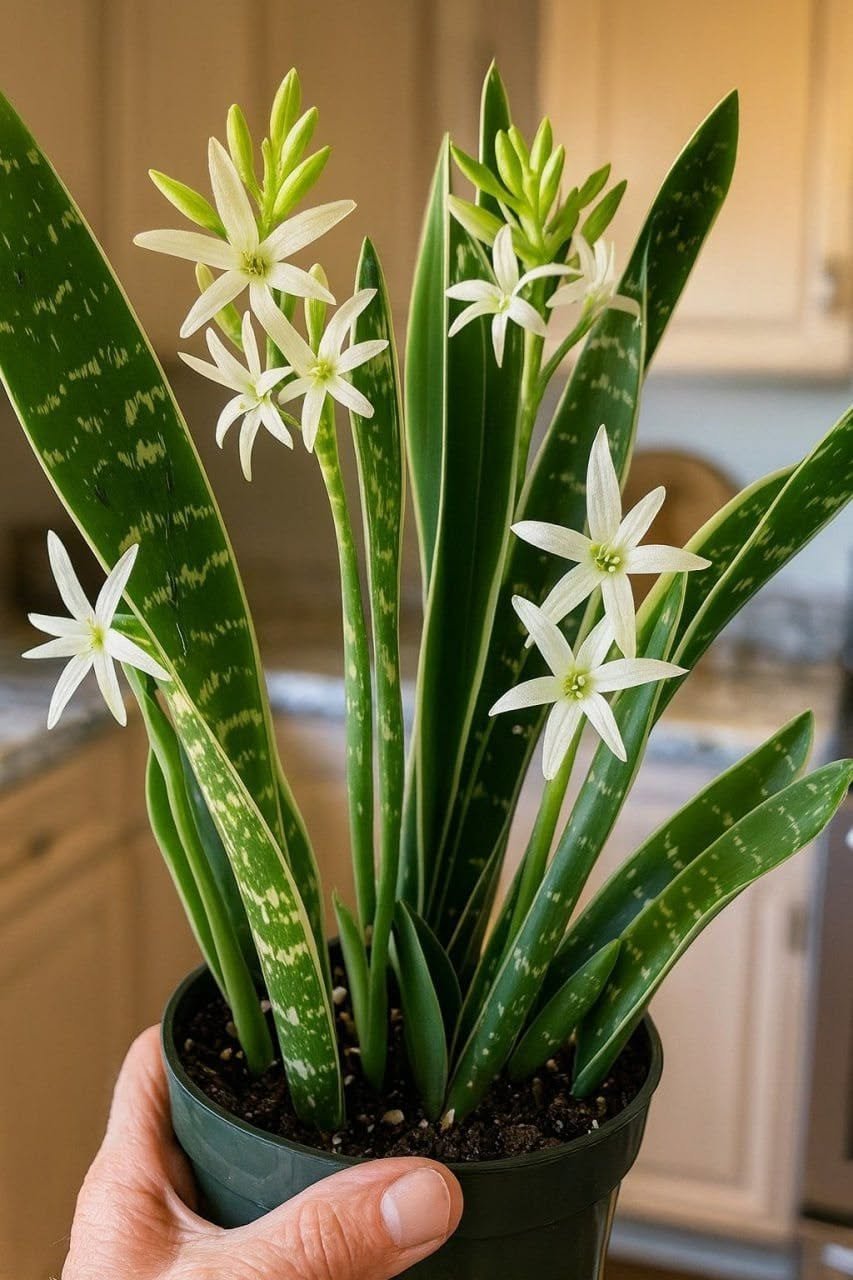
- A long flower stalk (up to 2–3 feet) emerges from the center of the leaves.
- Tiny, white/cream-colored budsbegin to open.
- Strong, sweet scent, especially in the evening or at night.
- Flowers may release sticky nectar, which is normal.
📖 Description of the Bloom
The flowers are:
- Long and tubular
- White or pale green
- Grow in clusters along a central spike
- Fragrant, especially at night (similar to jasmine or hyacinth)
Note: Blooming does not damage the plant. After flowering, the stalk dries up and can be cut off.
🔍 Conclusion
Getting a Mother-in-Law’s Tongue to bloom is rare, but not impossible. With a bit of patience, the right light, minimal watering, and a slight bit of stress, your Snake Plant may reward you with delicate flowers and a home-filling fragrance.
🌟 Recommendation
Place your plant in a bright room, water sparingly, and give it time. Don’t chase the bloom too hard — instead, focus on healthy care. When it does bloom, you’ll enjoy one of the most satisfying surprises in the plant world.
🍃 Embracing Healthful Indulgence
Let your home be filled with the natural perfume of a well-loved plant. The rare blooming of the Mother-in-Law’s Tongue is a reminder that patience, balance, and care can result in unexpected beauty. It’s a healthful indulgence: air purification, minimalist elegance, and — on rare, magical days — sweet fragrance from nature herself.
For Complete Cooking STEPS Please Head On Over To Next Page Or Open button (>)